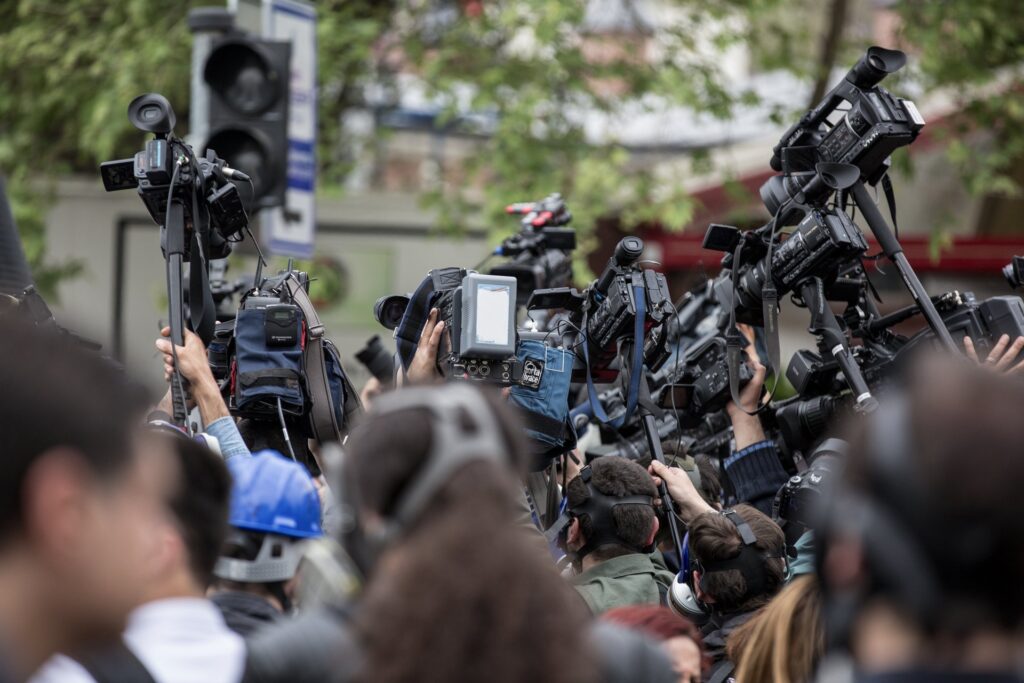
أقلام تحت النار: حرية التعبير في العالم العربي عام 2026
في عام 2026، كُتب سجلّ حرية التعبير في العالم العربي في قوائم ومؤشرات وتقارير — وهو سجلّ يصعب قراءته. بلد واحد تقدّم أكثر من أي بلد آخر في العالم. وفي الخليج، تحوّلت حرب إلى ذريعة للإسكات. والسؤال المطروح على مجلس ملتزم بالحرية الفكرية هو: ما الذي يحتاجه القلم فعلاً ليبقى حراً؟
في 2 تشرين الثاني/نوفمبر 2026، وفي اليوم الدولي لإنهاء الإفلات من العقاب على الجرائم المرتكبة ضد الصحفيين، نشرت منظمة مراسلون بلا حدود قائمتها لعام 2026 لـ«مفترسي حرية الصحافة»: 33 فرداً وكياناً ترى المنظمة أنهم يقوّضون الصحافة المستقلة عمداً. والقائمة ليست تصنيفاً للدول، بل تسمية للأشخاص والمؤسسات التي تُحمَّل المسؤولية، وهي مقسّمة إلى خمس فئات: سياسية وأمنية وقانونية واقتصادية واجتماعية. وفي الفئة الأمنية — أي المسؤولين عن سجن الصحفيين والاعتداء عليهم وقتلهم — ترد القوات المسلحة الإسرائيلية، وولي العهد السعودي الأمير محمد بن سلمان، والرئيس المصري عبد الفتاح السيسي، الذي أُدرج حديثاً في عام 2026. وفي الفئة السياسية يرد رؤساء الولايات المتحدة وروسيا والصين. وتختلف الأساليب المنسوبة إليهم، لكن المنظمة تقول إن هدفهم واحد: إسكات الأصوات المستقلة وتقييد ما يستطيع المواطنون معرفته.
وجاءت قائمة المفترسين بعد ستة أشهر من نشر المؤشر العالمي لحرية الصحافة لعام 2026 في 30 نيسان/أبريل 2026، الذي سجّل أدنى متوسط عالمي في تاريخ المؤشر الممتد 25 عاماً؛ ولأول مرة، وقع أكثر من نصف دول العالم في فئتي «صعب» أو «خطير جداً». وتحتل مصر المرتبة 169 من أصل 180، بنتيجة 24.92 من 100 — متقدمة مرتبة واحدة عن المرتبة 170 في عام 2025، لكنها ما زالت في فئة «خطير جداً». وذكرت مراسلون بلا حدود مصر بين الدول التي تدهور فيها المؤشر القانوني بشدة، مستشهدة بتجريم الصحافة عبر تشريعات الأمن القومي والطوارئ. وعندما ينضم رئيس إلى قائمة المفترسين في العام نفسه الذي تحتل فيه بلاده المرتبة 169 من 180، فإن السجلين يعزز أحدهما الآخر: المشكلة ليست القانون وحده، ولا القائد وحده، بل النظام الذي يجمع بينهما.
وفي مقابل هذه الصورة، تحرّك بلد عربي واحد في الاتجاه المعاكس — أكثر من أي بلد في العالم. فقد تقدّمت سوريا 36 مرتبة في مؤشر 2026، من المرتبة 177 في عام 2025 إلى المرتبة 141 من أصل 180، وهو أكبر تحسّن سُجّل في أي مكان في عام 2026. والسبب ليس غامضاً: فسقوط حكومة بشار الأسد في كانون الأول/ديسمبر 2024 أزال آلية قمع أبقت سوريا قرب قاع التصنيف العالمي لسنوات، واكتسب الصحفيون حرية أكبر في التنقل، ورقابة مباشرة أقل، ومجالاً أوسع للتغطية الناقدة. لكن هذا التقدّم يجب أن يُقرأ بحذر. فما زالت سوريا في فئة «خطير جداً»؛ وما زالت القوانين المقيّدة لحرية التعبير قائمة، وما زال الوصول إلى المعلومات مقيّداً في المسائل السياسية والأمنية. والتصنيف يستطيع أن يسجّل إزالة دكتاتورية؛ لكنه لا يستطيع وحده أن يسجّل بناء صحافة حرة. فهذا البناء — في القانون والمؤسسات وسلامة الصحفيين — ما زال ينتظر الإنجاز، وتقدّم سوريا هو بداية، لا وصول.
وإذا كانت سوريا هي بداية عام 2026، فإن الخليج هو تحذيره. ففي 19 أيار/مايو 2026، أفادت لجنة حماية الصحفيين بأنها وثّقت، منذ بدء حرب إيران في 28 شباط/فبراير، حملة قمع للصحافة في أنحاء الخليج، شملت حالات اعتقال وتخويف وإجراءات قانونية ومالية غير معلنة ضد الصحفيين. وكان النمط متشابهاً في الكويت والبحرين والإمارات العربية المتحدة والسعودية وقطر، إذ اعتمدت السلطات على ذرائع الأمن القومي لاحتجاز الصحفيين، ولم يُكشف عن كثير من الحوادث علناً لأن الصحفيين خشوا مزيداً من الانتقام. وقالت المديرة الإقليمية للجنة، سارة قده، إن «ما هو معروف علناً ليس سوى رأس جبل الجليد». ففي الكويت، حذّرت الحكومة في 28 شباط/فبراير من تصوير اعتراض الصواريخ، ثم أصدرت بعد أسبوعين المرسوم بقانون رقم 13، الذي يفرض عقوبات تصل إلى عشر سنوات سجناً لنشر معلومات عن كيانات عسكرية يُعتبر أنها قادرة على «تقويض الثقة العامة»؛ وسُجن الصحفي الكويتي الأمريكي أحمد شهاب الدين في الكويت 52 يوماً. وفي الإمارات العربية المتحدة، احتجزت السلطات ما لا يقل عن 109 أشخاص بزعم تصوير محتوى متعلق بالحرب أو مشاركته، وفقاً للأمم المتحدة. وفي البحرين، حُكم على المصوّر سيد باقر الكامل بالسجن عشر سنوات بعد أن نشر، بحسب التقارير، مقطع فيديو لآثار هجوم إيراني. وتحذير اللجنة وارد في عنوان تقريرها نفسه: هذه التدابير قد تصبح دائمة.
وقد احتفظت المنظمات الصحفية العربية نفسها بسجلّها الخاص. ففي 16 تشرين الأول/أكتوبر 2026، أطلق اتحاد الصحفيين العرب تقريره السنوي عن حرية الصحافة في العالم العربي لعامي 2025–2026 في دمشق — وهو أول إطلاق للتقرير هناك منذ تحرير سوريا، بحضور نحو 18 وفداً عربياً. وكان التقرير السابق قد أُطلق في نواكشوط بموريتانيا. والتقرير، الذي أعدّته اللجنة الدائمة للحريات في الاتحاد من تقارير المنظمات الأعضاء، يوثّق الانتهاكات ضد الصحفيين ويقيّم الجهود المبذولة لحماية حرية الرأي والتعبير. وكان لإطلاقه في دمشق، في العام نفسه الذي تقدّمت فيه سوريا 36 مرتبة في مؤشر مراسلون بلا حدود، معنى مزدوج: مهنة تحصي خسائرها، وبلد يختبر ما إذا كانت بداية جديدة لصحافته حقيقية.
أما أشدّ ما كُتب عن كلفة هذا العام على الصحفيات فجاء في اليوم العالمي لحرية الصحافة نفسه. ففي 3 أيار/مايو 2026، أصدرت منظمة «صحفيات بلا قيود» بيانها لهذا اليوم، مستندة إلى تقريرها «أقلام تحت النار: معركة الصحافة الوجودية في الشرق الأوسط وشمال أفريقيا». ووثّقت المنظمة تحوّلاً، خلال الأشهر الاثني عشر السابقة، من بيئات مقيّدة إلى ظروف تهديد حاد ووجودي، ولا سيما للصحفيات، ووصفت رئيستها، الحائزة على جائزة نوبل للسلام توكل كرمان، عام 2026 بأنه لحظة حرجة، مع ضعف الحماية الدولية تحت ضغط الاستبداد الرقمي والقمع المؤسسي. والبعد الإلكتروني ليس تجريداً: فقد وجدت دراسة لهيئة الأمم المتحدة للمرأة نُشرت قبل اليوم العالمي لحرية الصحافة أن 45 في المئة من الصحفيات اللواتي شملهن الاستطلاع يفرضن الرقابة الذاتية على وسائل التواصل الاجتماعي بسبب العنف الإلكتروني — بزيادة 50 في المئة منذ عام 2020 — وأن نحو 22 في المئة يفرضن الرقابة الذاتية في عملهن. فالقلم تحت النار قد يُسكت بتهديد في خط زمني، أو بتزييف عميق، أو بحملة مضايقة، بقدر ما يُسكت بطرق على الباب.
فما الذي تتطلبه الحرية الفكرية — وهي التزام أساسي لمجلس الفكر العربي — فعلاً في عام 2026؟ تشير أدلة العام إلى ثلاثة أمور، لا جديد فيها، وكلها غير منجزة. أولاً، القانون: ليس إلغاء القوانين التي تجرّم الصحافة باسم الأمن القومي فحسب، بل ضمان الوصول إلى المعلومات والحق في التغطية عن الحرب والمال العام والسلطة. ثانياً، الحماية: للصحفيين في النزاعات والسجون والمنفى وعلى الإنترنت، وللنساء بينهم اللواتي يواجهن تهديدات مهنية وشخصية في آن واحد. ثالثاً، فسحة للمعارضة — بما فيها المعارضة غير المريحة. فالصحافة التي لا يجوز لها إلا المديح ليست صحافة؛ بل جوقة. وتُظهر سوريا أن التغيير، حتى التغيير الكبير، ممكن حين تسقط آلية قمع. وتُظهر حملة الخليج العكس: فحرب، حتى لو كانت قصيرة، قد تمنح الحكومات أدوات قد تحتفظ بها. وبين هاتين الحقيقتين يكمن عمل المستقبل — أن تبقى البداية مفتوحة، وألا يصبح الطارئ هو القاعدة.
Sources
- زاوية 3، «السيسي وترامب وبن سلمان وماسك بين 33 اسماً وكياناً في قائمة مفترسي حرية الصحافة 2026»، 2 تشرين الثاني/نوفمبر 2026 — https://zawia3.com/en/press-predators/
- مراسلون بلا حدود، المؤشر العالمي لحرية الصحافة 2026، 30 نيسان/أبريل 2026 — https://www.commonspace.eu/news/worldwide-press-freedom-25-year-low
- ذا ميديا لاين، «هل يعكس تقدّم سوريا في مؤشر حرية الصحافة الواقع؟» — https://themedialine.org/top-stories/does-syrias-rise-in-the-press-freedom-index-reflect-reality/
- لجنة حماية الصحفيين، «حملة قمع الصحافة في الخليج تتصاعد بعد حرب إيران، وقد تصبح دائمة»، 19 أيار/مايو 2026 — https://cpj.org/2026/05/press-crackdowns-in-gulf-spike-following-iran-war-risk-becoming-permanent/
- صحيفة سوريا نيوز غازيت، «اتحاد الصحفيين العرب يقدّم تقريراً عن تحديات حرية الصحافة»، 16 تشرين الأول/أكتوبر 2026 — https://syrianewsgazette.com/federation-of-arab-journalists-reports-on-press-freedom-challenges/
- منظمة صحفيات بلا قيود، «بيان بمناسبة اليوم العالمي لحرية الصحافة — 3 أيار/مايو 2026» — https://www.tawakkolkarman.net/org-en/women-journalists-without-chains/tkif-news-2/6277-statement-on-world-press-freedom-day-–-3-may-2026
- أخبار الأمم المتحدة، «إساءة معاملة الصحفيات أصبحت “أسهل وأشد ضرراً” بفعل الذكاء الاصطناعي»، 30 نيسان/أبريل 2026 — https://news.un.org/en/story/2026/04/1167416
Pens Under Fire: Freedom of Expression in the Arab World in 2026
In 2026, the record of free expression in the Arab world was written in lists, indexes and reports — and it makes difficult reading. One country rose further than any other in the world. Across the Gulf, a war became a reason to silence. The question for a council committed to intellectual freedom is what protection a pen actually needs.
On 2 November 2026, the International Day to End Impunity for Crimes against Journalists, Reporters Without Borders (RSF) published its 2026 list of “press freedom predators”: 33 individuals and entities that, in RSF’s assessment, undermine independent journalism. The list names those held responsible, in five categories: political, security, legal, economic and social. In the security category — those held responsible for imprisoning, attacking and killing journalists — sit the Israeli armed forces, Saudi Crown Prince Mohammed bin Salman, and, newly listed in 2026, Egyptian President Abdel Fattah al-Sisi. In the political category sit the presidents of the United States, Russia and China. Their methods vary, but RSF says they share one aim: silencing independent voices and limiting what citizens can know.
The list arrived six months after RSF’s 2026 World Press Freedom Index, published on 30 April 2026, which recorded the lowest global average score in the Index’s 25-year history; for the first time, more than half of the world’s countries fell into the “difficult” or “very serious” categories. Egypt ranks 169th of 180, scoring 24.92 out of 100 — up one place from 170th in 2025, but still “very serious”. RSF named Egypt among the countries where the legal indicator deteriorated most sharply, citing the criminalisation of journalism through national-security and emergency legislation. When a president joins the predators list in the same year his country sits 169th of 180, the two records reinforce each other: the problem is not only the law, and not only the leader, but the system that joins them.
Against that background, one Arab country moved in the opposite direction — further than any country in the world. Syria climbed 36 places in the 2026 Index, from 177th in 2025 to 141st of 180, the largest improvement of 2026. The fall of Bashar al-Assad’s government in December 2024 removed a machinery of repression that had kept Syria near the bottom for years, and journalists gained greater freedom of movement and more room to report. But the rise must be read carefully. Syria remains in the “very serious” category; restrictive laws remain in place, and access to information is still constrained on political and security matters. A ranking can record the removal of a dictatorship; it cannot record the building of a free press. That building — in law, in institutions, in the safety of reporters — is still to be done, and Syria’s climb is an opening, not an arrival.
If Syria is 2026’s opening, the Gulf is its warning. On 19 May 2026, the Committee to Protect Journalists (CPJ) reported that since the Iran war began on 28 February, it had documented a crackdown across the Gulf: unpublicised arrests, intimidation, and legal and financial actions against journalists. The pattern was similar across Kuwait, Bahrain, the United Arab Emirates, Saudi Arabia and Qatar, with authorities relying on national-security grounds, and many incidents never disclosed because journalists feared further retaliation. “What is publicly known is only the tip of the iceberg,” CPJ’s regional director, Sara Qudah, said. In Kuwait, the government warned against filming missile interceptions, then enacted Decree-Law No. 13, imposing up to ten years in prison for disseminating information about military entities deemed capable of “undermining public confidence”; the Kuwaiti-American journalist Ahmed Shihab-Eldin was imprisoned there for 52 days. In the United Arab Emirates, authorities detained at least 109 people for allegedly filming or sharing war-related content, according to the United Nations. In Bahrain, the photographer Sayed Baqer Al-Kamel was sentenced to ten years after reportedly posting a video of the aftermath of an Iranian attack — measures CPJ warns risk becoming permanent.
The region’s own journalists’ organisations have kept a record. On 16 October 2026, the Federation of Arab Journalists launched its annual report on press freedom in the Arab world for 2025–2026 in Damascus — the first launch there since Syria’s liberation, with some 18 Arab delegations present. Compiled from reports by member organisations, it documents violations against journalists and efforts to safeguard freedom of opinion and expression. Its Damascus launch carried a double meaning: a profession counting its losses, and a country testing whether a new beginning for its press is real.
The sharpest account of what this year has cost women journalists came on World Press Freedom Day itself. On 3 May 2026, Women Journalists Without Chains issued its statement for the day, drawing on its report “Pens Under Fire: Journalism’s Existential Battle in MENA”. It documented a shift, over the previous twelve months, from restrictive environments to conditions of acute and existential threat, particularly for women, and its chair, the Nobel laureate Tawakkol Karman, described 2026 as a critical moment, with international protection weakening under digital authoritarianism. A UN Women study published ahead of the day found that 45 per cent of women journalists surveyed self-censor on social media because of online violence — a 50 per cent increase since 2020 — and almost 22 per cent self-censor in their work. A pen under fire is as likely to be silenced by a threat in a timeline, a deepfake, or a campaign of harassment as by a knock on the door.
What, then, does intellectual freedom — a core commitment of the Arab Thought Council — require in 2026? Three things, none new, all unfinished. First, law: repealing statutes that criminalise journalism as national security, and guaranteeing access to information and the right to report on war, public money and power. Second, protection: for journalists in conflict, in prison, in exile and online, and for the women among them who face threats both professional and personal. Third, room for dissent — including inconvenient dissent. A press that may only praise is not a press; it is a chorus. Syria’s rise shows dramatic change is possible when a machinery of repression falls. The Gulf’s crackdown shows the opposite: a war, even a short one, can hand governments tools they may keep. The work ahead is to keep the opening open, and stop the emergency becoming the rule.
Sources
- Zawia3, “Egypt’s Sisi, Trump, Bin Salman and Musk Among 33 Names and Entities on the 2026 Press Freedom Predators List”, 2 November 2026 — https://zawia3.com/en/press-predators/
- Reporters Without Borders, World Press Freedom Index 2026, released 30 April 2026 — https://www.commonspace.eu/news/worldwide-press-freedom-25-year-low
- The Media Line, “Does Syria’s Rise in the Press Freedom Index Reflect Reality?” — https://themedialine.org/top-stories/does-syrias-rise-in-the-press-freedom-index-reflect-reality/
- Committee to Protect Journalists, “Press crackdowns in Gulf spike following Iran war, risk becoming permanent”, 19 May 2026 — https://cpj.org/2026/05/press-crackdowns-in-gulf-spike-following-iran-war-risk-becoming-permanent/
- Syria News Gazette, “Federation of Arab Journalists Reports on Press Freedom Challenges”, 16 October 2026 — https://syrianewsgazette.com/federation-of-arab-journalists-reports-on-press-freedom-challenges/
- Women Journalists Without Chains, “Statement on World Press Freedom Day – 3 May 2026” — https://www.tawakkolkarman.net/org-en/women-journalists-without-chains/tkif-news-2/6277-statement-on-world-press-freedom-day-–-3-may-2026
- UN News, “Abuse of women journalists made ‘easier and more damaging’ by AI”, 30 April 2026 — https://news.un.org/en/story/2026/04/1167416