الأرشيف الذي لا يُنهب: إنقاذ الذاكرة الفلسطينية عام 2026
في أيلول/سبتمبر 2026، نال عاملان في مجال التراث من غزة جائزة اليونسكو/جيكجي لإنقاذهما مخطوطات من تحت الأنقاض. وعملهما — وأرشيفان رقميان ضخمان بُنيَا إلى جانبه — يطرحان سؤالاً طالما طرحه المجلس: ما فائدة الذاكرة، حين تختفي المباني التي كانت تحفظها؟
في 4 أيلول/سبتمبر 2026، في مدينة تشونغجو في كوريا الجنوبية، تسلّم غزّيان اثنان جائزة اليونسكو/جيكجي لذاكرة العالم. فقد أعلن المدير العام لليونسكو، خالد العناني، فوز المؤرّخ عبد اللطيف هاشم والباحثة والمهندسة حنين العمصي بالجائزة، بناءً على توصية لجنة دولية من الخبراء. وهما أول فردين ينالان الجائزة منذ إنشائها عام 2004، وقد اختيرا من بين 58 ترشيحاً دولياً رسمياً — وهو أعلى عدد في تاريخ الجائزة. وقيمة الجائزة 40,000 دولار، وتُمنح تقديراً للجهود التي تسهم في حفظ التراث الوثائقي وإتاحته بوصفه تراثاً مشتركاً للإنسانية.
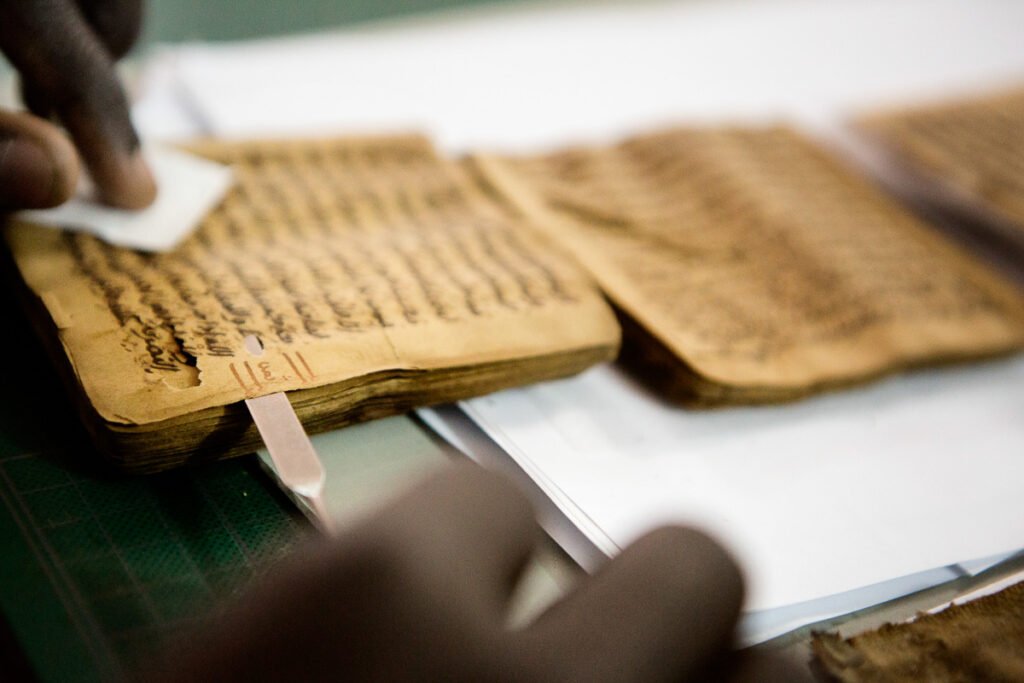
وما فعله الفائزان أسهل في الإعجاب به منه في تخيّل القيام به. فبالعمل مع منظمة محلية غير حكومية، هي «عيون على التراث» (Eyes on Heritage)، وبدعم من المجلس الدولي للأرشيف، شكّلا فريق استجابة طارئة انتشل وثائق نادرة من تحت أنقاض مبانٍ مدمّرة. ومن بين ما أنقذاه مواد من مكتبة الجامع العمري الكبير في البلدة القديمة بغزة، التي دُمّر معظمها في كانون الأول/ديسمبر 2023. وفي المجمل، حفظا ورقمنا أكثر من 258 مخطوطاً — ما يزيد على 25,000 صفحة — من العصرين المملوكي والعثماني، من بينها مخطوطات قرآنية مزيّنة بالخط العربي، وأعمال قانونية وطبية وأدبية. وقد حظي عملهما بدعم من برنامج الأرشيفات المهددة بالخطر التابع للمكتبة البريطانية، كما أسّسا أول مختبر متخصص في غزة لترميم المخطوطات، حتى لا يعتمد الحفظ على المساعدة الخارجية وحدها. وحتى 24 آذار/مارس 2026، كانت اليونسكو قد تحقّقت من تضرّر 164 موقعاً من مواقع التراث الثقافي في غزة منذ 7 تشرين الأول/أكتوبر 2023 — بينها 14 موقعاً دينياً، و128 مبنى ذا أهمية تاريخية و/أو فنية، و3 مستودعات للممتلكات الثقافية المنقولة، و9 نصب تذكارية، ومتحفان، و8 مواقع أثرية.
والمخطوط المُنقذ من الأنقاض شيء صغير يُحمل في اليد، وشيء كبير يُفكَّر فيه. فقد كُتبت هذه الصفحات قبل قرون، في مدينة غُزيت وأُعيد بناؤها وكُتب عنها مرات كثيرة. وبقيت لأن أحداً نسخها، وأحداً حفظها، وأحداً — في هذه الحالة، شخصين يعملان تحت القصف — رفض أن يتركها تضيع. والجائزة تقدّر هذا الرفض. وهي تقدّر أيضاً أمراً عملياً: فالصفحة المرقمنة يمكن قراءتها في غزة، وفي عمّان، وفي لندن أو كوالالمبور، من أي شخص لديه اتصال بالإنترنت، بعد زمن طويل من اختفاء المبنى الذي كان يحفظ الأصل. والرقمنة لا تحلّ محل المخطوط. بل تضاعفه، وتُخرجه من متناول أي قذيفة أو حريق أو ناهب واحد.
وهذه الفكرة — أرشيف لا يمكن الاستيلاء عليه لأنه موجود في كل مكان في آن واحد — هي أيضاً المبدأ الموجِّه لمشروع أكبر بكثير في الضفة الغربية. فقد بدأ المتحف الفلسطيني في بيرزيت أرشيفه الرقمي عام 2018، يجمع صوراً عائلية ورسائل وأوراق هوية ومذكرات وخرائط وأفلاماً، وغالباً بالذهاب من باب إلى باب. واليوم يضم الأرشيف الرقمي للمتحف الفلسطيني أكثر من 500,000 مادة مرقمنة. ويصفه مديره، الفنان عامر الشوملي، بأنه «أرشيف لا يُنهب»: فالنسخ محفوظة في أماكن مختلفة حول العالم، بحيث لا يستطيع هجوم واحد — مادي أو رقمي — أن يمحوها. ويدير المشروع ثلاثة موظفين بدوام كامل، يدعمهم متطوعون، ويموَّل من تبرعات الشتات وشراكات مع جامعة كاليفورنيا ومؤسسة غيردا هينكل. وقد جرّب فريقه أدوات ذكاء اصطناعي تستطيع قراءة العربية العثمانية، حتى تصبح الوثائق القديمة قابلة للبحث، لا مخزّنة فحسب. والأرشيف مفتوح المصدر، وقد شُارك وتُرجم في أماكن كثيرة، لأن غرضه ليس حفظ الأشياء آمنة فحسب، بل جعلها قابلة للاستخدام — للعائلات التي تتتبّع تاريخها، وللباحثين، ولكل من يريد أن يعرف كيف كانت الحياة الفلسطينية قبل أن تُقاطَع.
وثمة أرشيف ثالث، وهو الأكبر بين الثلاثة، يعود إلى الأونروا، وكالة الأمم المتحدة لإغاثة وتشغيل اللاجئين الفلسطينيين. ففي تشرين الثاني/نوفمبر 2026، أفادت الوكالة بأن نحو 30 مليون سجل تاريخي قد رُقمن — وهو رقم يُقرأ بوصفه ادّعاء الوكالة نفسها كما ورد في التقارير، لا حقيقة مؤكدة على نحو مستقل. وتوثّق السجلات حياة أجيال من اللاجئين: بطاقات تسجيل أصلية، وشهادات ميلاد وزواج، وأوراق تحدّد العائلات والبلدات والقرى التي هُجّروا منها بعد عام 1948. وبحسب الوكالة، قامت مجموعة صغيرة من الموظفين الفلسطينيين بمهمة خطرة خلال السنة الأولى من الحرب على غزة لإنقاذ هذه الوثائق من مبانٍ متضررة، ثم نُقل الأرشيف إلى عمّان لرقمنته. وحجم هذا الرقم متسق مع التقييم الاستراتيجي الخاص بالوكالة في حزيران/يونيو 2025، الذي سجّل أن نحو 20 مليون وثيقة رُقمنت في أوائل العقد الأول من القرن الحالي، وأن الملايين العشرة المتبقية رُقمنت خلال العام الماضي. والهدف المعلن للوكالة هو أن تتمكن من تزويد كل لاجئ بشجرة عائلة مع الوثائق الداعمة، ورسم خرائط لأنماط التهجير عام 1948؛ وقد قدّر مسؤولون في أيار/مايو 2026 أن إتمام هذا العمل قد يستغرق عامين آخرين.
إذن، ثلاثة أرشيفات، وثلاث إجابات مختلفة عن التهديد نفسه. واحد ينقذ الورق من الأنقاض، صفحة صفحة. وواحد يجمع الأدلة الحميمة على الحياة العائلية — صورة، رسالة، بطاقة هوية — وينسخها حول العالم. وواحد يحفظ السجل البيروقراطي لشعب بأكمله: أسماء وتواريخ وأماكن أصل، والأثر الورقي للتهجير. ولا يعيد أي منها بناء مكتبة مدمّرة. ولا يعيد أي منها عائلة إلى قريتها. وما تفعله أضيق من ذلك، ولهذا السبب يصعب تجاهله: إنها تُبقي على الدليل. فالشعب الذي تبقى وثائقه لا يمكن أن يُقال له إنه لم يوجد قط، أو إنه جاء من العدم.
وبالنسبة إلى مجلس يستحضر رسالته التاريخ، فهذه هي النقطة الجديرة بالتمسّك بها. فكثيراً ما يُتحدث عن الذاكرة بوصفها حنيناً — اشتياقاً إلى ما مضى. أما العمل الموصوف هنا فهو نقيض الحنين. إنه عمل عملي وتقني، وغالباً مملّ: مسح ضوئي، وفهرسة، وترجمة، ونسخ احتياطي، وترميم صفحة ممزقة بملقط. وهو أيضاً، بأبسط معنى، فعل عقل: الإيمان بأن الحقائق مهمة، وأن السجل المحفوظ بعناية شكل من أشكال الحجة، وأن الأجيال القادمة ستحتاج إلى أدلة، لا إلى قصص فحسب. ولم ينطلق أمناء الأرشيف في عام 2026 ليطلقوا بياناً سياسياً. بل انطلقوا ليضمنوا أن البيان، حين يُطلق، يمكن إثباته.
وهناك حدّ لما تستطيع الأرشيفات فعله، وينبغي تسميته بصراحة. فالمخطوط المرقمن لا يطعم عائلة، وشجرة العائلة لا تفتح حدوداً مغلقة. ومن بنوا هذه الأرشيفات سيكونون أول من يقول ذلك. لكن السجل الذي يبقى هو نقطة بداية لا يستطيع التدمير أن يسلبها. وفي عام تضرّر فيه أو دُمّر الكثير من تراث غزة، قد لا يكون الخبر الأكثر أملاً حفلاً في كوريا، على الترحيب به. بل قد يكون الحقيقة الأهدأ وراءه: أن عمل إنقاذ الذاكرة قد بدأ بالفعل، في غزة وبيرزيت وعمّان، قبل أن ينتبه العالم — وأنه يستمر، صفحة صفحة، سواء راقبه أحد أم لا.
Sources
- اليونسكو، «مهنيّون فلسطينيون في التراث الوثائقي يتسلّمون جائزة اليونسكو/جيكجي لذاكرة العالم 2026»، 4 أيلول/سبتمبر 2026 — الفائزان عبد اللطيف هاشم وحنين العمصي، أول فردين منذ 2004، الحفل في تشونغجو في 4 أيلول/سبتمبر، أكثر من 25,000 صفحة من العصرين المملوكي والعثماني، برنامج الأرشيفات المهددة بالخطر التابع للمكتبة البريطانية، أول مختبر لترميم المخطوطات في غزة، قيمة الجائزة 40,000 دولار — https://www.unesco.org/en/articles/palestinian-documentary-heritage-professionals-receive-2026-unesco/jikji-memory-world-prize
- صحيفة «ذا آرت نيوزبيبر»، «باحثون ينقذون مخطوطات متضررة من الحرب في غزة ينالون جائزة اليونسكو»، 17 أيلول/سبتمبر 2026 — 58 ترشيحاً (الأعلى في تاريخ الجائزة)، فريق الاستجابة الطارئة، مكتبة الجامع العمري الكبير دُمّر معظمها في كانون الأول/ديسمبر 2023، أكثر من 25,000 صفحة تشمل مخطوطات قرآنية وأعمالاً قانونية وطبية وأدبية — https://www.theartnewspaper.com/2026/09/17/researchers-rescuing-war-damaged-manuscripts-in-gaza-receive-unesco-prize
- اليونسكو، «اليونسكو وشركاؤها يضعون التعليم والثقافة والمعلومات في قلب تعافي غزة»، 15 تشرين الأول/أكتوبر 2026 — https://www.unesco.org/en/articles/unesco-and-partners-place-education-culture-and-information-heart-gazas-recovery
- اليونسكو، «الأثر على التراث الثقافي» (ضمن عمل اليونسكو في قطاع غزة / فلسطين)، آخر تحديث 25 آذار/مارس 2026 — حتى 24 آذار/مارس 2026، تحقّقت اليونسكو من تضرّر 164 موقعاً منذ 7 تشرين الأول/أكتوبر 2023: 14 موقعاً دينياً، و128 مبنى ذا أهمية تاريخية و/أو فنية، و3 مستودعات للممتلكات الثقافية المنقولة، و9 نصب تذكارية، ومتحفان، و8 مواقع أثرية. — https://www.unesco.org/en/gaza/assessment
- SciTech / WIRED، «الفلسطينيون يبنون أرشيفاً “لا يُنهب” لحماية تاريخهم الممحو»، 7 تموز/يوليو 2026 — الأرشيف الرقمي للمتحف الفلسطيني بدأ عام 2018، أكثر من 500,000 مادة مرقمنة (صور، أوراق هوية، مذكرات، خرائط، أفلام، رسائل)، المدير عامر الشوملي، نسخ محفوظة حول العالم، ثلاثة موظفين بدوام كامل ومتطوعون، تبرعات الشتات، جامعة كاليفورنيا ومؤسسة غيردا هينكل، أداة ذكاء اصطناعي تقرأ العربية العثمانية — https://www.scitech.top/en/news/palestinians-build-an-unlootable-digital-archive-to-safeguard-their-erased-history
- شفقنا، «الأونروا تنقذ سجلات اللاجئين الفلسطينيين من قصف غزة»، 4 تشرين الثاني/نوفمبر 2026 — الأونروا تعلن رقمنة نحو 30 مليون سجل تاريخي؛ مهمة إنقاذ قام بها موظفون فلسطينيون خلال السنة الأولى من الحرب؛ السجلات تشمل بطاقات تسجيل وشهادات ميلاد وزواج وبلدات وقرى الأصل. (تقرير ثانوي، عبر المركز الفلسطيني للإعلام؛ والرقم 30 مليوناً يُعرض في المقال بوصفه ادّعاء الوكالة.) — https://en.shafaqna.com/489304/unrwa-saves-palestinian-refugee-records-from-gaza-bombardment/
- التقييم الاستراتيجي للأونروا، تقرير إلى الأمين العام، 20 حزيران/يونيو 2025 — نحو 20 مليون وثيقة رُقمنت في أوائل العقد الأول من القرن الحالي؛ والملايين العشرة المتبقية رُقمنت خلال العام الماضي، بعد إنقاذ الوثائق من غزة ونقل الأرشيف من القدس الشرقية إلى عمّان؛ الهدف تزويد اللاجئين بأشجار عائلة ومستودع رقمي آمن — https://www.un.org/pga/wp-content/uploads/sites/109/2025/07/Report-to-the-Secretary-General-UNRWA-Strategic-Assessment-20-June-2025-002.pdf
- Israel Behind the News، «المهمة السرية لإنقاذ أرشيف اللاجئين الفلسطينيين الحيوي التابع للأمم المتحدة»، 14 أيار/مايو 2026 — الرقمنة في عمّان بتمويل أساسي من لوكسمبورغ، أكثر من 50 موظفاً، نحو 30 مليون وثيقة مرقمنة، وتقدير المسؤولين بأن العمل المتبقي قد يستغرق عامين آخرين — https://israelbehindthenews.com/2026/05/15/the-secret-mission-to-rescue-the-uns-vital-palestinian-refugee-archive/
The Unlootable Archive: Saving Palestinian Memory in 2026
In September 2026, two heritage workers from Gaza received UNESCO’s Jikji Prize for rescuing manuscripts from the rubble. Their work — and two vast digital archives built alongside it — raises a question the Council has long asked: what is memory for, when the buildings that held it are gone?
On 4 September 2026, in Cheongju in South Korea, two Gazans received the UNESCO/Jikji Memory of the World Prize. The historian Abdul Latif Hashim and the researcher and engineer Haneen Al-Amassi were named laureates by UNESCO’s Director-General, Khaled El-Enany, on the recommendation of an international jury. They are the first individuals to receive the prize since it was established in 2004, chosen from 58 nominations — the highest number in its history. The $40,000 prize rewards efforts to preserve documentary heritage as the common heritage of humanity.
What the two laureates did is easier to admire than to imagine doing. Working with the local non-governmental organisation Eyes on Heritage, they set up an emergency response team that pulled rare documents from beneath the rubble — including materials from the medieval Great Omari Mosque library in Gaza’s old city, mostly destroyed in December 2023. In all, they preserved and digitised more than 258 manuscripts — over 25,000 pages — from the Mamluk and Ottoman periods, including Qur’anic manuscripts adorned with calligraphy, and legal, medical and literary works. Their work was supported by the British Library’s Endangered Archives Programme, and they also established Gaza’s first specialised manuscript restoration laboratory. As of 24 March 2026, UNESCO had verified damage to 164 cultural heritage sites in Gaza since 7 October 2023 — 14 religious sites, 128 buildings of historical and/or artistic interest, 3 depositories of movable cultural property, 9 monuments, 2 museums and 8 archaeological sites.
A manuscript rescued from rubble is a small thing to hold, and a large thing to think about. These pages were written centuries ago, in a city conquered and rebuilt many times over, and they survived because someone kept them — and because two people working under bombardment refused to let them be lost. A digitised page, meanwhile, can be read in Gaza, in Amman, in London or in Kuala Lumpur, long after the building that held the original is gone. Digitisation does not replace the manuscript. It multiplies it, and it removes it from the reach of any single shell, fire or looter.
That idea — an archive that cannot be seized because it exists everywhere at once — is also the guiding principle of a much larger project in the West Bank. The Palestinian Museum in Birzeit began its digital archive in 2018, collecting family photographs, letters, identity papers, diaries, maps and films, often by going door to door. Today the Palestine Museum Digital Archive holds more than 500,000 digitised items. Its director, the artist Amer Shomali, calls it an “unlootable archive”: copies are stored in different places around the world, so that no single attack — physical or digital — can erase it. The project is run by three full-time staff, supported by volunteers, and funded by diaspora donations and partnerships with the University of California and the Gerda Henkel Foundation. The archive is open-source, and it has been shared and translated in many places, because its purpose is not only to keep things safe but to make them usable.
A third archive, and the largest of the three, belongs to UNRWA, the United Nations agency for Palestine refugees. In November 2026 the agency reported that approximately 30 million historical records have been digitised — a figure to be read as the agency’s own claim, as reported, rather than as independently confirmed fact. The records document generations of refugees: original registration cards, birth and marriage certificates, and papers identifying families and the towns and villages from which they were displaced after 1948. According to the agency, a small group of Palestinian staff undertook a dangerous mission during the first year of the war on Gaza to rescue these documents from damaged premises, and the archive was then transferred to Amman for digitisation. The figure is consistent with the agency’s own strategic assessment of June 2025, which recorded about 20 million documents digitised in the early 2000s and the remaining 10 million in the past year. The agency’s stated aim is to give every refugee a family tree with supporting documents, and to map the displacement of 1948; officials estimated in May 2026 that finishing that work could take another two years.
Three archives, then, and three different answers to the same threat. One rescues paper from rubble, page by page. One gathers the intimate evidence of family life — a photograph, a letter, an identity card — and copies it around the world. One keeps the bureaucratic record of a whole people: names, dates, places of origin, the paper trail of displacement. None of them rebuilds a destroyed library. None of them returns a family to its village. What they do is narrower, and for that reason harder to dismiss: they keep the evidence. A people whose documents survive cannot be told that it never existed, or that it came from nowhere.
For a council whose mission invokes history, that is the point worth holding on to. Memory is often spoken of as nostalgia — a longing for what is gone. The work described here is the opposite: practical, technical, often tedious — scanning, cataloguing, translating, backing up, restoring a torn page with tweezers. It is also, in the plainest sense, an act of reason: the belief that facts matter, that a record kept carefully is a form of argument, and that future generations will need evidence, not only stories. The archivists of 2026 did not set out to make a political statement. They set out to make sure that the statement, when it is made, can be proved.
There is a limit to what archives can do, and it should be named honestly. A digitised manuscript does not feed a family, and a family tree does not open a closed border. But a record that survives is a starting point that destruction cannot take away. In a year when so much of Gaza’s heritage was damaged or destroyed, the most hopeful news may not have been a ceremony in Korea, welcome as it was. It may have been the quieter fact behind it: that the work of saving memory had already begun, in Gaza, in Birzeit and in Amman, before the world noticed — and that it continues, page by page, whether or not anyone is watching.
Sources
- UNESCO, “Palestinian Documentary Heritage Professionals to Receive 2026 UNESCO/Jikji Memory of the World Prize”, 4 September 2026 — laureates Abdul Latif Hashim and Haneen Al-Amassi, first individuals since 2004, ceremony in Cheongju on 4 September, 25,000+ pages from Mamluk and Ottoman periods, British Library Endangered Archives Programme, Gaza’s first manuscript restoration laboratory, $40,000 prize — https://www.unesco.org/en/articles/palestinian-documentary-heritage-professionals-receive-2026-unesco/jikji-memory-world-prize
- The Art Newspaper, “Researchers rescuing war-damaged manuscripts in Gaza receive Unesco prize”, 17 September 2026 — 58 nominations (highest in the award’s history), emergency response team, Great Omari Mosque library mostly destroyed December 2023, 25,000+ pages including Qur’anic manuscripts and legal, medical and literary works — https://www.theartnewspaper.com/2026/09/17/researchers-rescuing-war-damaged-manuscripts-in-gaza-receive-unesco-prize
- UNESCO, “UNESCO and partners place education, culture and information at the heart of Gaza’s recovery”, 15 October 2026 — https://www.unesco.org/en/articles/unesco-and-partners-place-education-culture-and-information-heart-gazas-recovery
- UNESCO, “Impact on cultural heritage” (UNESCO’s Action in the Gaza Strip / Palestine), last update 25 March 2026 — as of 24 March 2026, UNESCO had verified damage to 164 sites since 7 October 2023: 14 religious sites, 128 buildings of historical and/or artistic interest, 3 depositories of movable cultural property, 9 monuments, 2 museums and 8 archaeological sites. — https://www.unesco.org/en/gaza/assessment
- SciTech / WIRED, “Palestinians Build an ‘Unlootable’ Digital Archive to Safeguard Their Erased History”, 7 July 2026 — Palestinian Museum Digital Archive begun 2018, 500,000+ digitised items (photographs, identity papers, diaries, maps, films, letters), director Amer Shomali, copies stored around the world, three full-time staff and volunteers, diaspora donations, University of California and Gerda Henkel Foundation funding, AI tool reading Ottoman Arabic — https://www.scitech.top/en/news/palestinians-build-an-unlootable-digital-archive-to-safeguard-their-erased-history
- Shafaqna, “UNRWA saves Palestinian refugee records from Gaza bombardment”, 4 November 2026 — UNRWA reports approximately 30 million historical records digitised; rescue mission by Palestinian staff during the first year of the war; records include registration cards, birth and marriage certificates, and towns and villages of origin. (Secondary report, via the Palestinian Information Center; the 30 million figure is presented in the article as the agency’s claim.) — https://en.shafaqna.com/489304/unrwa-saves-palestinian-refugee-records-from-gaza-bombardment/
- UNRWA Strategic Assessment, Report to the Secretary-General, 20 June 2025 — about 20 million documents digitised in the early 2000s; the remaining 10 million digitised in the past year, following the rescue of documents from Gaza and the transfer of archives from East Jerusalem to Amman; aim to provide family trees and a secure digital repository — https://www.un.org/pga/wp-content/uploads/sites/109/2025/07/Report-to-the-Secretary-General-UNRWA-Strategic-Assessment-20-June-2025-002.pdf
- Israel Behind the News, “The secret mission to rescue the UN’s vital Palestinian refugee archive”, 14 May 2026 — digitisation in Amman funded primarily by Luxembourg, more than 50 staff, almost 30 million documents digitised, officials estimate the remaining work could take another two years — https://israelbehindthenews.com/2026/05/15/the-secret-mission-to-rescue-the-uns-vital-palestinian-refugee-archive/